![]() |
||
Contact us:
Copyright
© |
MARC’s 17th Annual Regional Assembly focuses on creating communityHow can citizens cooperate and solve problems for themselves? That was the question asked by author Peter Block, keynote speaker, at MARC’s 17th Annual Regional Assembly on Friday, June 7, at the Sheraton Crown Center in Kansas City, Mo. More than 500 attendees heard Block address the need for a shift in thinking that focuses on possibilities rather than problems. “The discussion of what’s wrong never heals a wound…but there is another conversation that should be held. Who’s doing something worthwhile and how do we take advantage of that?” he asked. Block said the most successful communities are those where people come together to celebrate their differences and work on neighborhood collaboration. The event also included presentation of MARC’s annual Regional Leadership Awards. The 2013 honorees were:
Watch all of the videos from the event» ![]() Back row, left to right: Eric Rogers, Todd Ackerson, Mike Burke, Dr. Ray Daniels, David Warm. Grant Funds Available for Waste Reduction, Reuse and Recycling Projects
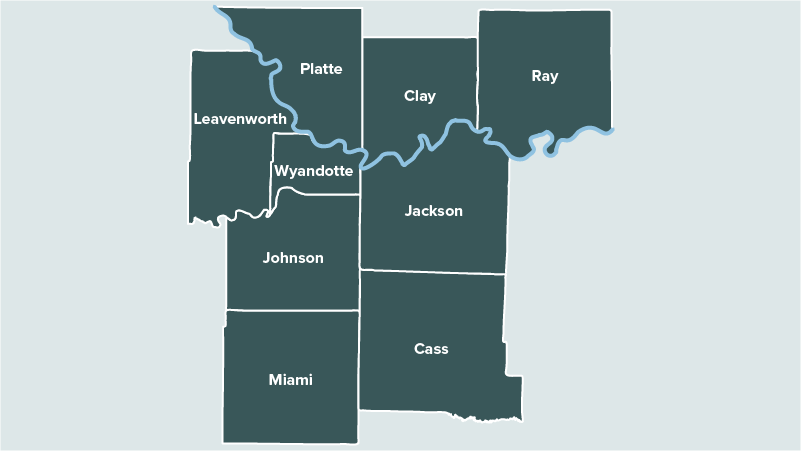
All projects must be located within the MARC Solid Waste Management District, which includes Cass, Clay, Jackson, Platte and Ray counties in Missouri. The district receives funds for the grant program from the Missouri Department of Natural Resources. Information sessions will be held June 4, June 12 and June 14. In addition, a grant workshop will be held June 20. More details in the news release» Kansas State University honors MARC’s executive director
Under Warm’s leadership, MARC has actively engaged the university and its students in regional issues by providing internships, conducting collaborative research and inviting students to participate in planning initiatives. K-State students have been involved in a wide range of MARC’s initiatives, including MetroGreen, the Green Impact Zone, the First Suburbs Coalition and Creating Sustainable Places. K-State students and faculty have also collaborated with MARC through the Kansas City Design Center, where Warm has been a longtime advisor and board member. Congratulations to the EES graduates
EES is a free weeklong training for unemployed and underemployed residents. The session focuses on basic skills for job seekers including interviewing, resume writing, work ethic and proper attire for the workplace. The zone provides each graduate with a certificate of completion. In order to graduate, participants must arrive on time, dress in business attire and demonstrate professionalism each day. The Green Impact Zone connects EES graduates with local employers looking for job-ready candidates who have the necessary skills to be productive employees. Particular emphasis is placed on contractors doing work within the zone. The zone maintains a list of the graduates and their skillsets for referral when employers call seeking job applicants. Guest speakers at the EES training included: Steve McClellan of the Local Investment Commission; Pam Cobbins of Connections to Success; Michael Tyler, a motivational speaker and coach; and zone staff. For the first time, Connecting for Good offered computer skills training as part of EES. Other partners in the training include the Metropolitan Energy Center; OAI, Inc.; and Connections to Success. The May session was the sixth EES training held by the Green Impact Zone. To date, 102 residents have graduated from the program and nine have found jobs, with more interviews scheduled to take place. The next EES training will be held in October. Kansas City to receive Brownfields grantKansas City, Mo., has received a $600,000 Brownfields grant from the Environmental Protection Agency (EPA) to fund a bistate project to evaluate properties for hazardous substances. The grant will fund several environmental assessments in a 25.5-square-mile portion of eastern Wyandotte County, Kan., and western Jackson County, Mo. The area includes industrial districts, both downtowns and adjacent neighborhoods. A portion of the grant will be set aside for community involvement activities — providing direct assistance to projects that feature urban agriculture, high-speed fiber connectivity, and hard infrastructure improvements to help communities re-connect, help businesses grow and create jobs. The partners in the grant are the city of Kansas City, Mo., the Unified Government of Wyandotte County/Kansas City, Kan. and the Mid-America Regional Council (MARC). MARC will work with the two cities to convene a stakeholder committee and help planning and outreach efforts. MARC will also connect the partners to other regional initiatives, including transportation, homelessness and workforce development. The EPA Brownfields Program allows states and communities to work together to prevent, safely clean up and reuse brownfields. Brownfields are properties that may be difficult to develop or reuse because of the presence of hazardous substances or pollutants. Collective Impact: Large-scale social change requires broad cross-sector coordinationJohn Kania, managing director of FSG and co-author of Collective Impact, came to Kansas City, Mo., to meet with area leaders to discuss ways of solving issues by working together. FSG is a non-profit consulting firm helping organizations create more effective ways to solve social problems. ![]() John Kania, managing director of FSG and co-author of Collective Impact, in the MARC Board Room Two sessions with Kania were co-hosted by MARC and KCPT-TV. The first, held at KCPT, included representatives from foundations; the second, held at MARC, brought together stakeholders focused on issues such as aging, early learning, health care access, healthy communities, neighborhood and community development and homelessness. According to the Collective Impact model, “no single organization alone has the ability to solve the world’s most challenging problems.” Kania outlined five necessary conditions for Collective Impact. The first is a common agenda where all participants have a shared vision for change and a joint approach for solving it through agreed upon actions. The second is shared measurement, whereby data collection and measurement of results are consistent among everyone involved. The third is mutually reinforcing activities, which means activities among participants must be differentiated, but coordinated through a mutually reinforced plan of action. The fourth is continuous communication which helps build trust across many players. Lastly, backbone support requires staffing with a specific set of skills to manage coordination among participating organizations and agencies. Kania was careful to note that social issues are not an easy or quick fix. “The middle word in collaboration is labor,” he said. View the presentation» New Greater Kansas City Regional Trails & Bikeways map is now available![]() Scan this QR code with your smartphone to download the web app. Just in time for National Bike Month in May, a new KC Regional Trails and Bikeways map is available for area bicyclists and walkers. The Mid-America Regional Council worked with local governments to produce the map using aerial photography, global positioning systems (GPS) and geographic information systems (GIS) data to provide the most up-to-date information available. The previous version of the map had a total of 702 miles of trails and bikeways. The new map shows 1,273 miles of trails and bikeways. You can request a free printed map online, or download the Regional KC Bike Map web app to your smartphone by scanning the QR code from the website. |
Kansas City SkyCast for 06/19/2013
Award-winning Quinton's Clean-Air Mayors’ Bistate Innovations Team and Google Fiber Playbook ![]() |
About
MARC • MARC News • Departments and
Programs |
||
MARC programs that receive federal funding may not discriminate against anyone on the basis of race, color, sex or national origin, according to Title VI of the Civil Rights Act of 1964. Read the policy ››
|
||